



 by
by 
The Spanish real estate market continues to show strong momentum in 2026, and this is particularly evident in Andalusia.
As a real estate agency based in the Costa del Sol, we are committed to staying up to date with the latest market trends. To support this goal, we prepared a full report.
It covers property prices, foreign demand, supply from Spanish builders, and approved mortgage statistics. You will be able to download a summarised PDF version at the end. Make sure you don’t miss it!
Recent data from the INE, Idealista, and mortgage statistics show steady demand and rising prices. Genuine buyers drive the market, not speculation. Spain is short of 800,000 housing units, mortgage rates are relatively low, and the supply is healthy.
Are Property Prices Still Rising in Spain? Latest 2026 Data Explained
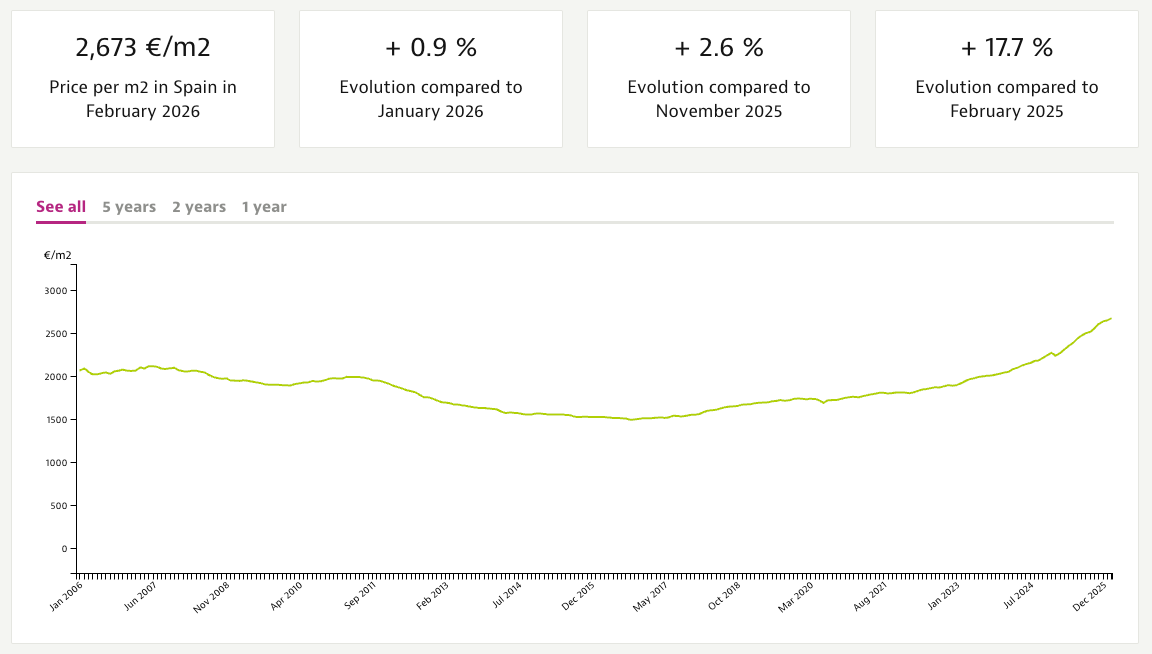
The latest figures confirm that property prices in Spain are rising quite strongly. As of February 2026, the average price was €2,673 per m², marking a year-on-year increase of 17.7%. Short-term growth remains positive too, at +0.9% month-on-month and +2.6% over the last three months.
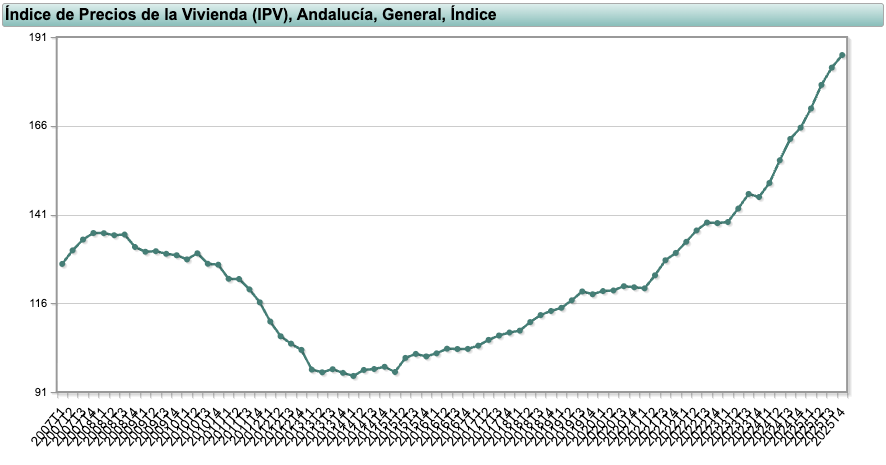
Focusing on Andalucía, the long-term housing price index shows a clear rise. Prices increased from about 100 in 2015 to nearly 186 in 2025. This is a substantial increase. This is not a temporary trend — it is a steady upward movement over nearly a decade.
From a lifestyle perspective, this makes sense. People are choosing Spain not just for investment purposes, but also for its high quality of life. Even in winter, cafés are full, beaches are busy and daily life continues outdoors. This constant demand naturally supports prices.
Key Fundamental Factors of The Spanish Property Market in 2026
Foreign Demand
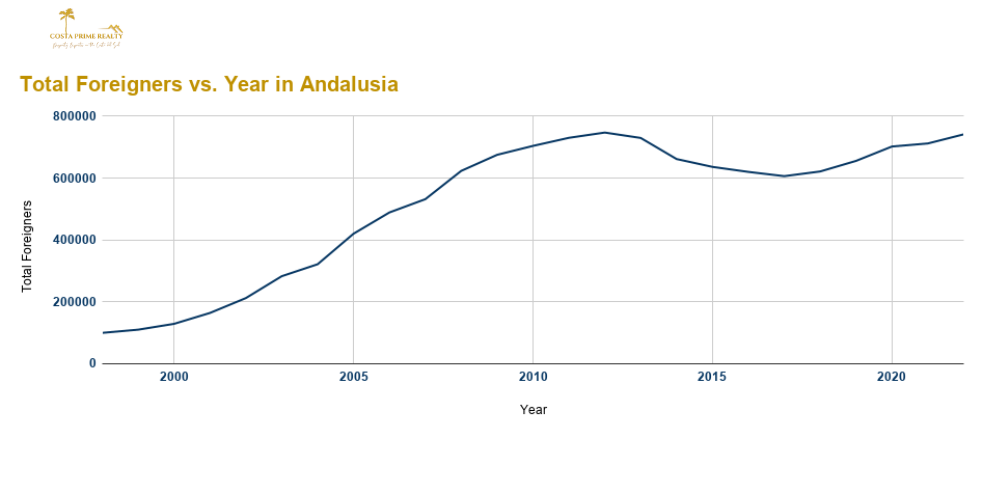
The foreign population in Andalusia has grown strongly over time. It rose from about 100,000 in late 1998 to over 747,000 in 2022.
The largest expansion occurred between 2003 and 2012. It then declined during the financial crisis. Since 2017, it has recovered steadily and reached new highs.
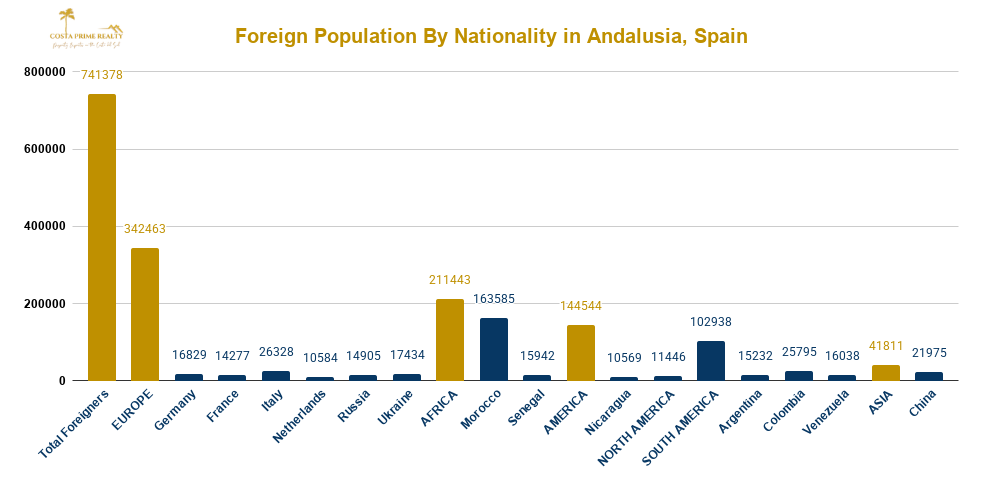
European nationalities dominate the market, accounting for over 342,000 residents. Key groups include Italians (26,328), Germans (16,829), and French (14,277). There is a strong and growing presence from Africa, especially Morocco (163,585) and Senegal (15,942).
There is also a strong presence from Latin America.
Significant numbers come from Colombia (25,795) and Argentina (15,232).
*Please note that the recent data from INE (Instituto Nacional de Estadística) is from 2022.
This distribution highlights Andalusia’s enduring appeal and ability to attract a foreign population totaling around 741,000. The mix of European lifestyle buyers and rising demand from new markets strengthens Costa del Sol’s place as a top choice.
It remains a premier destination for retirees, second-home owners, and international property investors.as a premier destination for retirees, second-home owners, and international property investors.
Mortgage Activity Spain (2003–2025)
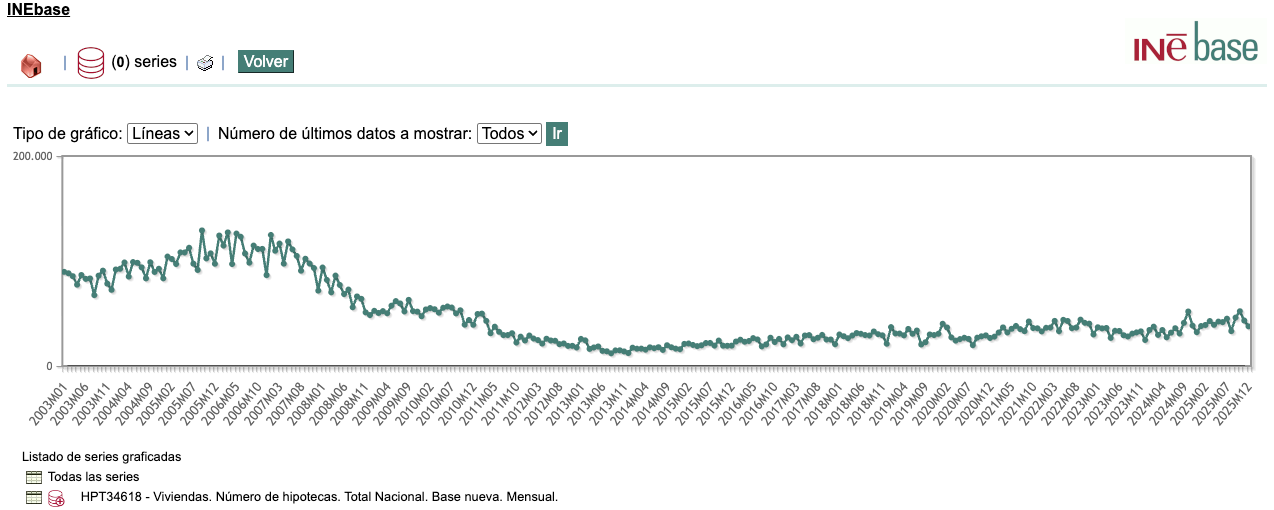
The mortgage market in Spain between 2003 and 2025 underwent a full cycle, shaped by economic events and recovery. Mortgage approvals peaked during the pre-2008 boom, after which lending activity dropped significantly following the financial crisis.
From around 2014 onwards, however, the market gradually recovered, supported by low interest rates and improving economic conditions. Despite rising interest rates in 2022–23, mortgage activity stayed fairly resilient in recent years.
New lending rose by over 10% a year in 2025. Total loan volumes grew even faster. This suggests demand for property in Spain remains strong. Buyers still get financing, even with higher rates.
Property Transactions Andalucía (2007–2025)
Property transactions in Andalucía show a clear cycle when we look at the numbers between 2007 and 2025. Before the financial crisis, transactions were at their peak, with over 167,800 property sales annually in Andalucía around 2007.
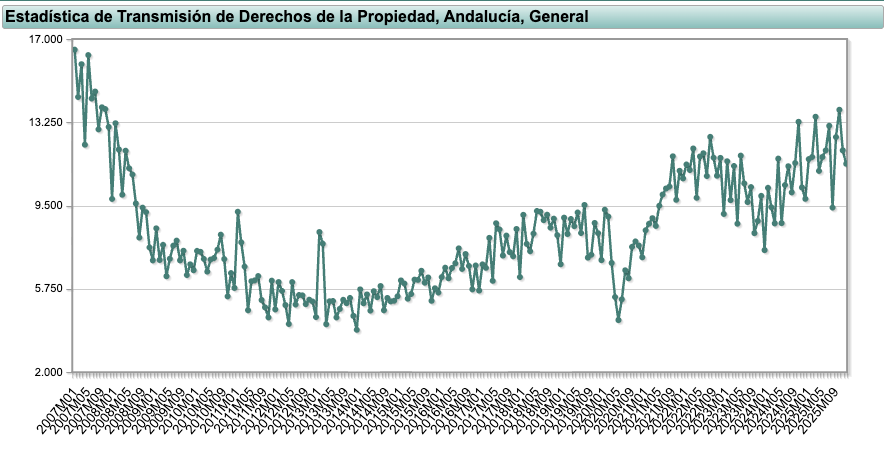
After the crisis, activity dropped significantly, falling to roughly 60,000–62,000 transactions per year between 2012 and 2014. From 2015 onwards, the market began to recover steadily, supported by foreign demand and improving economic conditions.
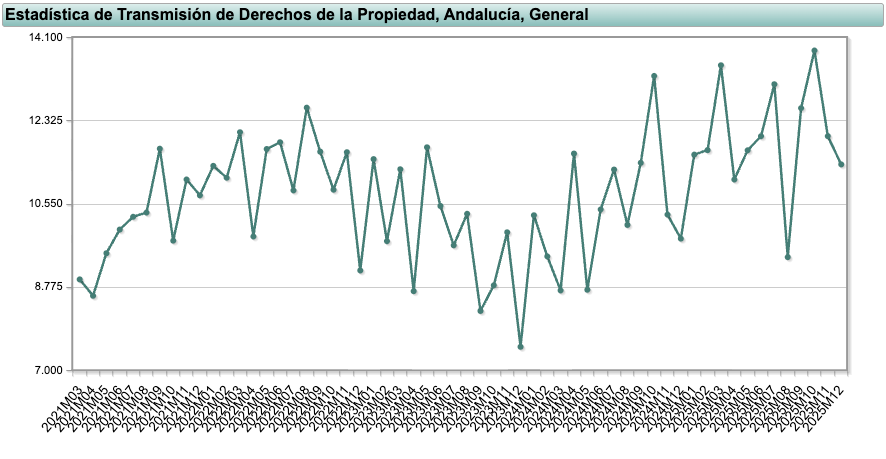
In recent years, the numbers have become particularly strong again. By 2022–2023, Andalucía recorded about 117,969 to 134,647 property transactions each year. This figure stayed stable in 2025, despite higher interest rates. In 2025, we recorded 143,794 transactions.
This means the region now operates near pre-crisis levels, with more balanced and sustainable demand. In areas like the Costa del Sol, this demand is even clearer. International buyers play a key role. They help keep transaction volumes high.
The Latest Report From Banco de España
The latest Bank of Spain report confirms strong growth in prices, demand, and financing in Spain’s property market. Housing prices have risen significantly, with the Housing Price Index increasing by 12.7% in 2025 compared to 8.4% in 2024 and 4.0% in 2023. Second-hand properties led this growth, with an annual increase of +12.9%, while new builds increased by +11.3%. Meanwhile, the average price per square meter rose to €2,128 in 2025, up from €1,914 in 2024 and €1,809 in 2023.
Supply: Building Licence Approved, Built Homes and Transactions
In terms of supply, construction is increasing but remains limited. In 2025, authorities approved (visados) approximately 139,000 new homes, and builders started around 140,000 homes. Demand remains strong, with around 752,000 property transactions in 2025 compared to 716,000 in 2024.
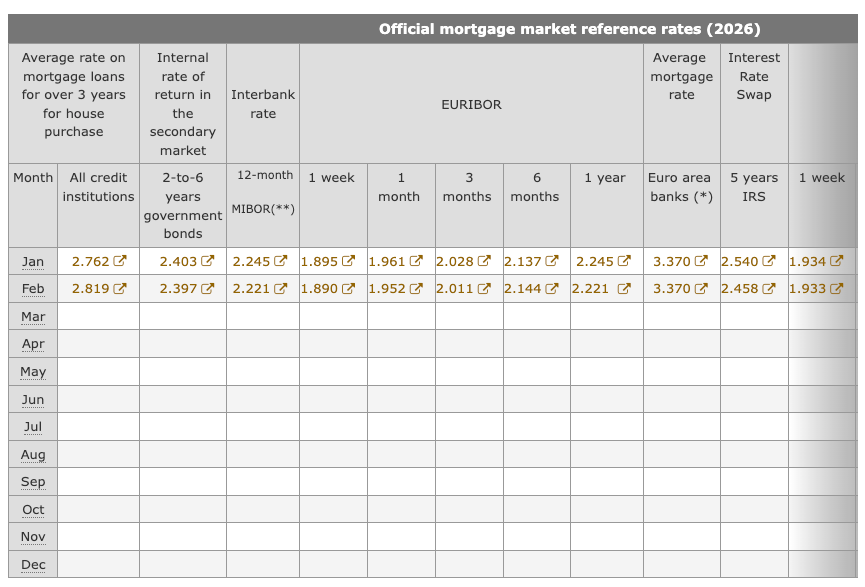
Mortgage conditions are improving. Average interest rates fell to about 2.7% in early 2026.
Loan-to-value ratios rose to around 64.8%. This suggests lenders are more confident.
Meanwhile, the number of households in Spain continues to grow. It has reached 19.85 million. This supports long-term housing demand.
Spain’s housing market has grown a lot over the past few decades. What matters is how this growth compares to real demand. The total number of homes increased from 10.6 million in 1970 to 26.6 million in 2021, demonstrating robust long-term growth. However, the number of homes per household has stayed fairly stable.
It changed slightly from about 1.45 between 1981 and 1991.
It peaked at 1.52 in 2001.
It then settled at 1.41 in 2021.
This suggests that, despite the substantial increase in construction, the actual surplus of housing is quite limited. Put simply, Spain has built more homes.
But household formation has kept pace.
This helps explain why property prices keep rising.
Prices rise most in high-demand areas like the Costa del Sol.
In these places, supply is often tighter than the figures suggest.
2026–2030 State Housing Plan: What It Could Mean for the Costa del Sol
Spain’s new €7 billion Housing Plan (2026–2030) aims to boost affordable housing. It will renovate existing homes and improve access to housing nationwide.
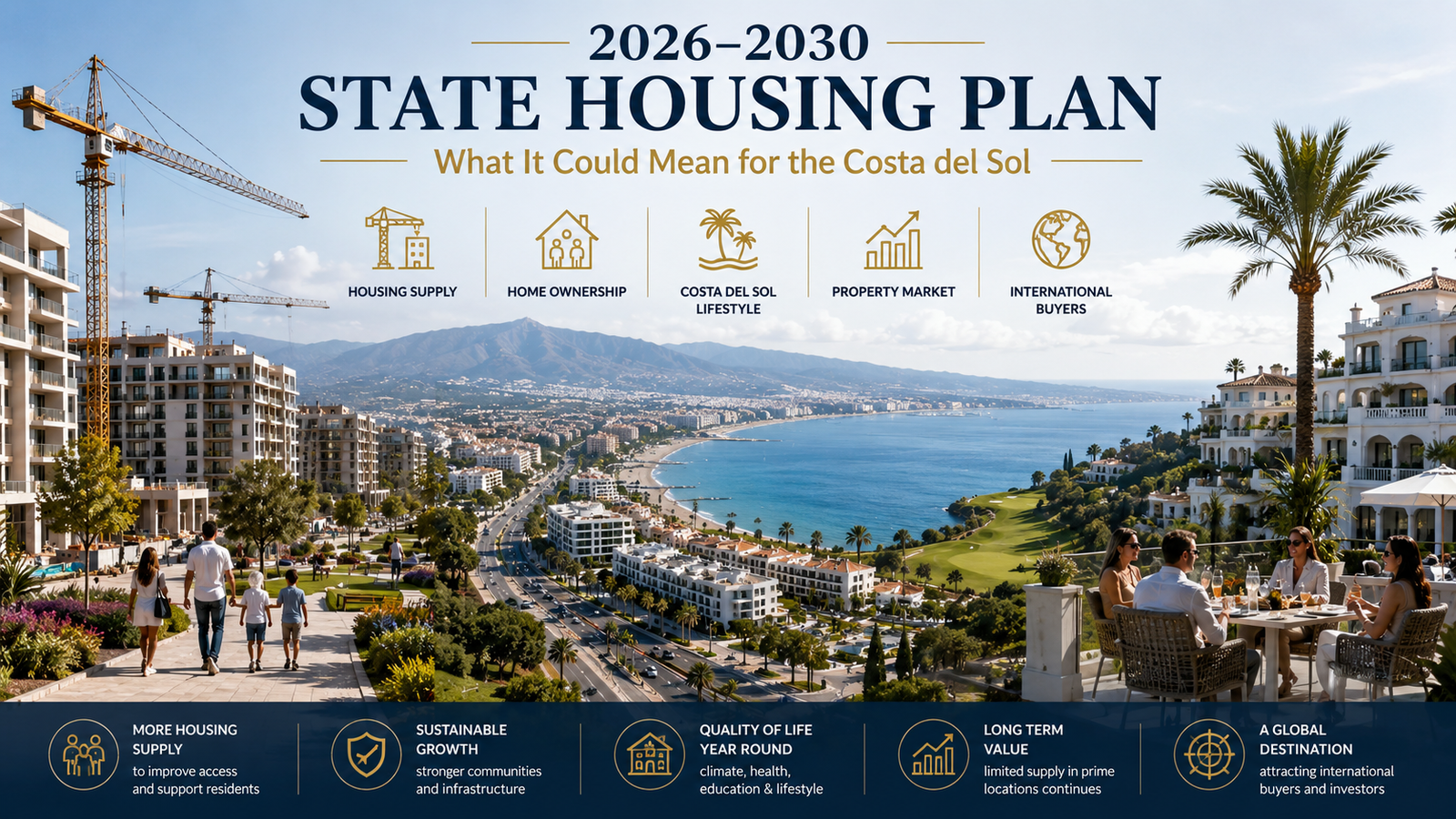
Meanwhile, the Costa del Sol keeps attracting residents, investors, and international buyers.
For the Costa del Sol, the impact is likely to be mixed.
More housing could support local workers and full-time residents.
It could also improve long-term sustainability in growing towns.
However, international demand, limited coastal land, and lifestyle-focused buyers continue to drive areas such as Marbella, Benahavís, Estepona, and Sotogrande.
For investors and second-home owners, the key fundamentals remain unchanged:
- Strong international demand
- Excellent infrastructure
- Growing year-round population
- High quality of life
- Limited supply in prime locations
While housing policy may affect some parts of the market, the Costa del Sol still benefits from strong buyer demand.
It attracts buyers from Europe, North America, and other regions.
Conclusion
Overall, Spain’s property market has strong demand and limited effective supply. This is true despite high housing stock on paper. This continues to drive up property prices and maintain stable market activity, particularly in popular regions such as Andalucía.
Download the PDF Report Version For May 2026
Get the latest insights on property prices, foreign demand, mortgage trends, and investment opportunities.
Learn what’s happening across the Costa del Sol and Spain.



Join The Discussion